Out of the 21 Rhode Island Red hatchery pullets I bought last spring, I was hoping one might turn out to be a mistaken rooster. And these ladies are so assertive that more than once I thought I did have a rooster, with the way they spar, and mount each other! But, I finally decided it wasnât the case- I have sixteen hens left, and no sire amongst them. So, I have been on a quest for a RIR roo!
Blog
Candling Duck Eggs
After our small coyote duck massacre, I came to realize I have no drakes left. I had winnowed down to two drakes, because too many aggressive breeders are hard on the ladies. Both of them came up missing. I want to always have fertilized eggs so I can breed more ducks from time to time, so a new boy duck is needed. If necessary, Iâll buy one. But for now, I stuck some eggs in the incubator in hopes that I might hatch a male for free. It would be good to increase the flock a little too, I like to keep at least a dozen ducks for laying.
Flushing Ewes Again This Year
I waffled again this year on whether or not to âflushâ the ewes prior to breeding. Flushing is putting them on an increasing plane of nutrition as they come into heat, coaxing their bodies to release more eggs, to render a higher rate of twins and triplets. Last year I did it, and had a 200% lamb crop born, so I think Iâm going to stick with the plan for another year or so; and then maybe experiment with dropping it and see how it compares.
The Future of Katahdins and Meat Sheep
The last speaker I listened to at the KHSI Expo was Dr. Kreg Leymaster, a researcher from the USDA Meat Animal Research Center (MARC) in Nebraska. His talk was inspiring, he made me feel pretty fired up about our breed! đ MARC is doing a lot of research on sheep breeds, trying to winnow down which ones are the best producers, the best tasting as lamb, and have the lowest maintenance requirements. I gather that the general vision at MARC is to help America develop the dreamiest sheep breed ever: one that consistently produces 200% or better lamb crops, with no help, thrives on the average forage offered by the open range (not grain feed lots!), and renders high quality, good-tasting lamb. The ultimate put-dinner-on-the-table sheep!
Old Lady Udder
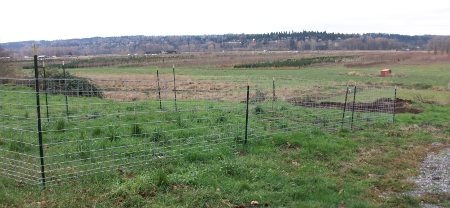
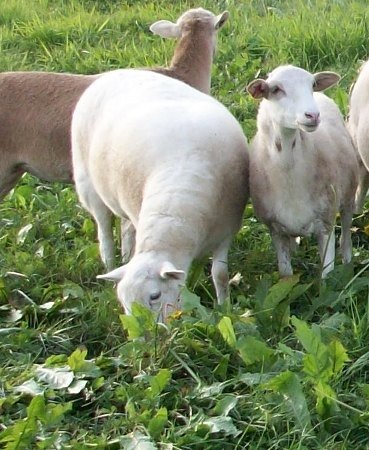
Udders have been on my mind the past few weeks. Our 7-month old ewe lambs were still nursing on their overly indulgent mothers. I will be separating the ewes in a few weeks, because the ewe lambs are going to pair with a different sire than the older ladies. I figured it would be good to get weaning out of the way before then; both so the mothers could start adding some condition (though none of them are thin!) and so the ewe lambs wouldnât be stressing about weaning during the week they should be breeding. So, a few weeks ago, I split the hotwire enclosure into two halves.
What Is Inside Geneâs Toe?
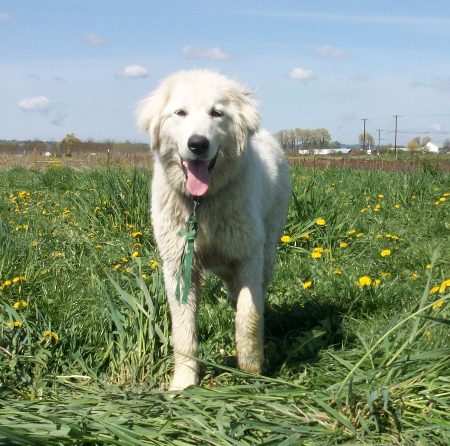
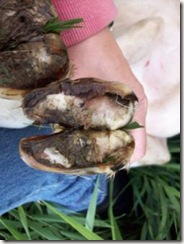
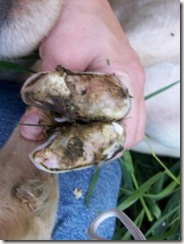
My Border Collie, Gene, has been battling some kind of leg or foot problem off and on for several months. It caused her to not use her right front leg at all. Though she gets around famously on three legs- she can really cruise! The issue didnât seem to be causing her any distress or discomfort, she went about her business like she wasnât even aware that she was only working with three legs!
At first I thought this was caused by a thorn or other sharp object in her foot, as originally I could see a little hole in her pad (or maybe even an insect bite or sting?). I could massage and palpate her whole leg and foot, and hyper-extend it in all directions, with no complaint from her- just a little sensitivity right on the pad was all I could find. I tried digging around in there with a needle and squeezing it, but could never produce anything large enough to explain the problem-just sand grains would come out of the hole (hmm). I tried a couple of different homeopathic remedies, and soaking in Epsom salts, thought the problem was gone, but then it came back. So, I finally sought the help of a vet to figure it out.
Marketing Our Hair Sheep and Lamb
Here are some notes I had on a marketing presentation I heard at the KHSI Expo in Oregon. Dr. Charles Parker has a long background in livestock research, and he spoke on the future of the lamb industry in this country, and how we should be thinking about marketing our product.
So, first off, the future generally looks very bleak! The U.S. lamb industry is actually on an eighty-year severe decline!
Hillbilly Dinner: The Coyoteâs Leftovers
Sunday we had a coyote attack on our ducks, after going all summer without losing any. Usually a coyote will just take one duck and make off with it. But this time, it was a major fray, in the middle of the day. We had fourteen ducks, and I think this little doggy managed to bite every single one of them! It was either a group of coyotes (though Kirk only saw one streak across the driveway when he went outside) or a young pup that got carried away with enthusiasm and unskilled efforts at dispatching birds!
Three ducks are outright missing (sewn-up duck is one of them, I am sad!). I found two freshly dead, and another died later from apparent internal injuries. So, we are down to eight from fourteen, in one incident! Ouch! Iâm not certain we have a boy left in the group either, uh oh!
The two freshly killed ones I decided we could eat, they were still warm when we found them, and I had time, so I butchered them up! A hillbilly would never let a coyoteâs leftovers go to waste, after all! đ
Continue reading “Hillbilly Dinner: The Coyoteâs Leftovers”
Sheep âShipping Feverâ â No Good End

I mentioned that one of my new sheep seemed to be feeling under the weather the first few days after I got her home. But after giving her some liquid nutrient as a pick-me-up and immune system support, she seemed to recover, and I saw her grazing, chewing her cud, and generally looking fine by the end of the week. I check on all our animals daily, so am quick to observe any problems.
Last Friday evening, I noticed she was hanging her head again, and seemed thinner, with runny eyes and new diarrhea. Continue reading “Sheep âShipping Feverâ â No Good End”
Parasite Control in Sheep and Goats
Ok, I have notes from three more speakers I heard at the KHSI Expo in Corvallis. Dr. Jim Miller addressed parasite control; he is from the Veterinary Medical School at Louisiana State University. He is also one of the founders of the Southern Consortium for Small Ruminant Parasite Control.