When I start researching a topic, I can really get obsessed. And such is the case with mineral supplement options for sheep. I might have just bought my bag of āsheep mineralā from the local feed store for years and not given it a second thought, had it not been for Pat Colebyās book Natural Sheep Care. The book is a mind-boggling read, going into great depth on dozens of trace minerals, and the role each one plays in nutrition, and when deficient, in disease. When I first read this book, my reaction was ābleah!!ā and I stuck it back on the shelf, because the stuff just seemed too complicated. And you would think surely the makers of my feed store mineral bag already had all this figured out, right? š
Blog
Mobile Mineral Menu for Sheep and Other Livestock
Quite a while ago, I read Pat Colebyās book Natural Seep Care. Then I put it on the shelf for a long time, because her assertions and suggestions are a bit overwhelming, and not easy to implement. But Iāve decided to embark on following some of her advice, including offering the sheep individual trace minerals (instead of a commercial proprietary mix) so they can eat what they crave.
The first challenge was figuring out a sheltered, but moveable, device in which to offer this mineral buffet, since the sheep are in ever-rotating pastures. I nagged myself to craft something from scratch, but just wasnāt getting to it. So I finally purchased two nifty mineral feeder stations.
Continue reading “Mobile Mineral Menu for Sheep and Other Livestock”
Coyote Skinning
Iāve talked several times before about our coyote predation problems, and our attempt to manage coyotes partly by attempting to teach them to stay out of the yard and livestock areas, and using removal as a final option. Weāve had reasonable luck this year with shooting at them and (intentionally) missing, and having that be enough of a deterrent toĀ keep them at a distance. But, for the ones that do keep returning and not responding to our ātrainingā methods, eventually, weāre not goingĀ to miss! So that is what happened last week, we had one that kept lurking, boldly continuing to snag poultry from the yard, and Kirk finally got him. We don’t like to take them out, but if they are constantly killing livestock and do not respond to training, they have to go.
This was while I was out of town in Pullman, and Kirk called with the news. He ended up putting the coyote in the freezer to wait until I got home. It fit neatly into the empty above-the-fridge freezer that weād recently replaced with our new French door fridge. So, we had a frozen coyote in the kitchen. š Before that though, he weighed the coyote and all the dogs. You see, we always get a kick out of people expressing great fear of coyotes, and amazement that we chase them, because they are really little dogs. Littler than our dogs. And theyāre pretty chicken; they are no fools, they donāt take on something that might injure them if they donāt have to. And that was the case with this fellow, as you can see from the photo above, heās a petite little canine, just about the same size as Maggie. Hereās how they weighed in:
Coyote: 33.5 pounds
Maggie: 42 pounds
Gene: 36 pounds
Spanky: 48 pounds
We thawed him out this weekend for processing. This coyote was actually not in good health, and his skin and tail were very mange-ey and he had some bald patches. He may not have made it through the winter on his own, and was probably targeting our poultry out of desperation for something easy enough for his unhealthy body to catch. Despite the patchy appearance, we thought it would be good practice to skin it, and once the hide was off, it looked OK. So for fun weāll tan it for a wall-hanger, even though itās not a fancy fur.
Iām not sure how to judge wild dog teeth for age estimation, but if this were a domestic dog, I would estimate 5-7 years old, based on the wear of the āscallopsā off of the front incisors. This may be somewhat āelderlyā for a coyote? They may wear their teeth faster than dogs though, so maybe heās not quite that old. But definitely a mature male. Itās interesting to see how much longer and larger their teeth are compared to domestic dogs, definitely still designed for hunting, not kibble eating!
![]()
Below is how we skinned it. Warning: graphic pictures ensue, so only read on if youāre up for it! This post is in no way meant to disrespect nature or glorify killing, but to acknowledge that sometimes predators have to be killed, when they are making a habit of eating livestock and do not respond to gentler control attempts. When you do have to harvest one, you might as well make good use of the hide, and recycle the rest back to nature, so nothing is wasted. And learn some anatomy too. So, hereās how itās done, or one way to go about it.
Fencing Done
I donāt like to count a task finished until Iām really done- tools put away and everything. But I can pretty much say Iām done fencing the center field. At least, I was able to move the sheep into it at the end of September. I had a few lingering details left to finish, like filling in some nasty ankle-twister holes in the field and adjusting a gate that didnāt ride smoothly. Iāve done those now.
Ram Marking Harnesses
Iāve been really pleased with using marking harnesses with the rams this year, itās reassuring to verify that everyone is getting bred on schedule, and that there were no accidents earlier in August that I didnāt know about! Here are two girls with nice clear blue marks on them, indicating that in five months, they should have some of Hersheyās lambs.
But, here is one that didnāt go as planned:
Oops! Thatās both blue and green! Thatās ācuz Hershey busted through the hotwire separating the groups on a couple of occasions. So, oh well, Iāll have a few lambs with a mystery sire. If they are great and Iām dying to keep them, I can DNA test them so they can be registered; otherwise theyāll just go on the locker list. And this is probably where the marking harness provides most of its value, is when somebody gets where they shouldnāt. Without them, Iād have no idea what went on in the few hours Hershey was in the wrong pen, where this way, at least I can quantify the damage!
Garden Round-Up
Our garden produce is winding down for the year. We got an amazing amount of stuff, considering how little effort we put in. We have a whole basket full of potatoes in the pantry, which we are rapidly eating down. I love to make mashed potatoes with either a sweet potato or yam mixed in- a tip I learned from a past neighbor of mine, Barb, who felt that sneaking those in improved the healthiness of regular mashed spuds, while still pleasing her kids! š It improves the flavor, too, I think!
Livestock Advisor WSU Tour
For the last couple of months, Iāve been taking the Livestock Advisor course thatās sponsored by Washington State University. The concept of the course is to get a broad overview of training about all types of agricultural livestock; and then to give back to the community by sharing this information in a variety of volunteer opportunities. Iām enjoying the courses, though they are a bit more basic than Iād hoped. But, you always pick up something from a class, and Iāve learned a few new things.
Last week, we traveled to WSU to do a whirlwind tour of all of their agricultural facilities.
Insulating the Innards of Antique Weighted Windows
The front of our house used to have three side-by-side wood-framed windows, as can be seen by this 1937 tax photo I found in the county Assessor records. In the eighties, a prior owner had them replaced with a bay window.
Continue reading “Insulating the Innards of Antique Weighted Windows”
Llama Taming
The llama is getting a little tamer these days. I think having lived here for about a year now, sheās adjusted more and gotten used to me, all the dogs, and the layout of the place. She is much less flighty.
Dude Harnesses
This week is all about the boys, for once, on the farm! Usually boys play a bit part and the girls have a starring role on farms, but there are times when the men get their due. We do need them!
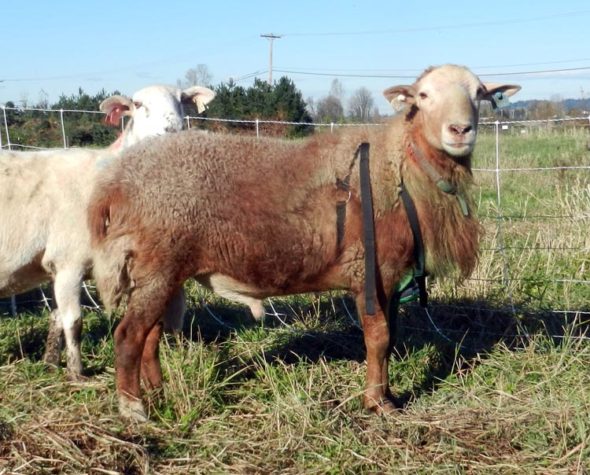
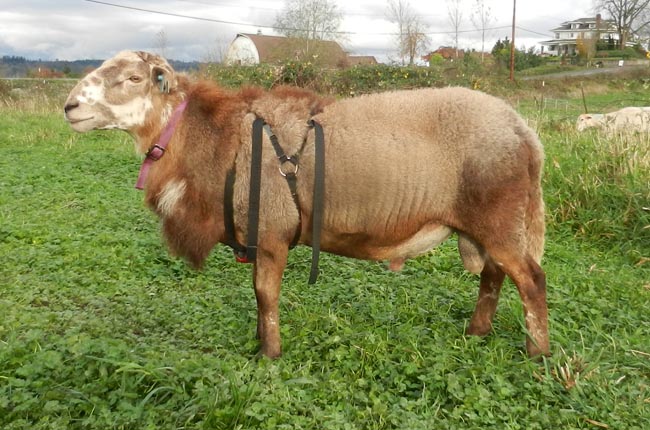
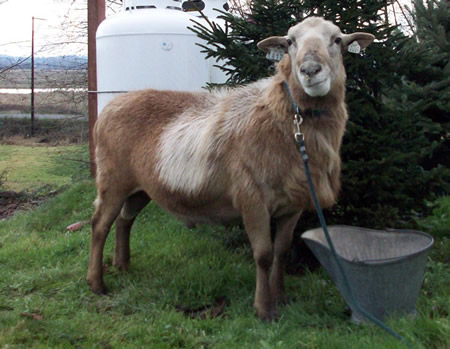
Yesterday was the start of breeding week for the sheep, so Tuesday, the rams got fitted with their breeding harnesses.