Saturday Plans

Ah, Saturday! I love the weekends, it’s so nice to be able to sleep in a bit (only til 7am today though!) and have two whole days ahead to get things done at home. This morning, I’m going to finish the ridge cap on the Duck Tractor and put all the tools away from building that. I like that step of a project, of putting everything away when it’s done.

Next, I am going to assemble a wood picnic table kit I bought at Home Depot. I debated on this one, the design is very simple, and the cost for the kit is about double the raw materials- $70 instead of maybe $35. But, it would take me several more hours to build one from scratch than to put this one together, and I have other things I want to get done. So, the kit it shall be today.

Kirk is hoping I’ll disposition one last pile of spare lumber, that’s covered in a very pathetic looking, and no longer waterproof, blue tarp. So, I’ll try to get that done to make him happy. (Well, it’ll make me happy too, to say goodbye to the last of the necessary, but tacky-looking, tarps that were in use during the phase of putting this place together. But, I have a higher tolerance for putting up with such things while I’m getting other things done, I might have left it there another year, who knows?) And, I want to squeeze in setting a wood fence post or two. And, clean house. Oh dear, you can see how that is slipping in priority (again)! 😮

This evening, my parents, siblings and sister’s kids are coming over for dinner. My parents both had birthdays last week, and tomorrow is Fathers’ Day. This will be the first time I’ve offered to host a family gathering here. The accommodations are still very spartan, to say the least. But for my family, I think they’ve concluded “beggars can’t be choosers”- my brother is currently between houses and “shacking” with the sis, and my sister and mom get weary of always hosting family events. So,  they’ll be glad to delegate to me, regardless of my lack of a formal parlour for house guests! 😉 And, as I’d hoped, the weather is supposed to be nice, so we can spill outside, my favorite place to be, enjoying the view and maybe a campfire of rotten barn wood.

On the menu: Appetizers shall be  tortilla chips & made-from-scratch fruit salsa, also crackers with a cream cheese covered with raspberry chipotle sauce (from a jar). Dinner is marinated flank steak on the BBQ, green beans and/or a green salad (I’ll see what looks best at the store today). My dad wanted to bring a Walleye fish they caught last weekend, but said there isn’t enough for a whole meal. To complement that, I’ll make basmati rice cooked in coconut milk, and use more of the fruit salsa-that’s my favorite combination for fish. For dessert, I ordered a cake <sigh>- I knew there wouldn’t be time to bake today; and I’ll serve it up with ice cream for good measure.

Wardeh’s “Use Less Plastic” Challenge

One of my favorite bloggers, Wardeh Harmon, has issued us a challenge: use less plastic. Check out her blog post to read all of her great reasons why. I don’t like plastic either: I worry about it leaching into my food, I don’t like that it increases demand for fossil fuels, or that even recycling it uses a lot of energy. It’s an amazing invention, and it has its place, for sure. But, it just doesn’t have a great score in the “carbon footprint” scale. So I have been trying to say “no” to it more, too.

And, I’m starting to reflect that many “old school” materials are just a lot more appealing: wood, glass, ceramic, brick, basket materials, cotton, hemp, wool, metal, stone- they look more pleasing, and feel nicer. I am trying to erradicate plastic in lots of places, especially from the yard, animal equipment, and food storage containers.

How can you give plastic the boot in your life? Take the challenge!

Fencing little by little

Wednesday night I got a wee bit of fencing prep done, I went out and measured and marked the post locations on a whole line. But then, I realized I made a math error (darn those, I seem to be challenged in that area) and had to re-do several of the marks. That’s annoying, trying to orange-spray-paint not-so-little notes to myself on roughly mowed grass, “Ignore this post marker, wrong spot, use that one over there…” Hopefully I can remember how to interpret my notations when I go back to place the posts!

I was also vexed to see that one of the wood brace posts I’d concreted-in had somehow shifted, it’s 2″ off the string line, and I had them SO perfect when I set them! Maybe some deer leaned up against it for an hour smoking a cigarette there, 😉 I don’t know; I can’t imagine how they could have moved! So, now I’m debating whether to ignore the flaw and let the fence be crooked there, or to add a 2″ board onto that post to fix the line. Hmm.

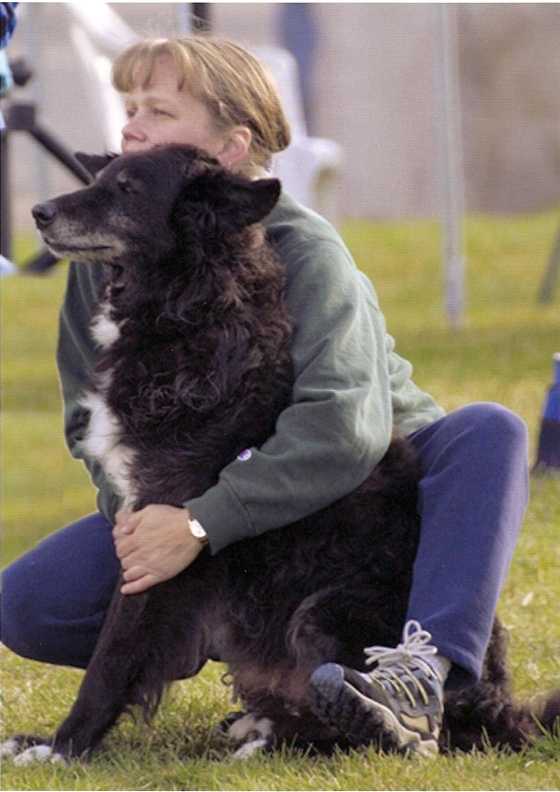
After this chore, and after wrestling Old Chessie back to the house (poor, senile dog, he tends to just wander, and fall down, in the field) we watched No Country for Old Men, a Cohen Brothers film. It was violent, which I don’t like, but still a good watch. They have such a weird style, it’s hard not to appreciate their oddity, I guess.

Duck Tractor Done

I finished the “duck tractor” (ala “chicken tractor”) last weekend– start-to-finish, including two shopping trips, over Saturday & Sunday. Ok, I need to do a little more trim-out still, it needs a ridge cap on the roof, and needs more staples on the chicken wire. But, it’s habitable, at least, so the ducks were able to “move out” on Sunday night! Phew! Here they are, settling into their new digs; read on for info on how I came up with this rig.

Baby ducklings inside their new tractor.

I’m fairly proud of my tractor design, I made it from scratch, and I think it looks pretty classy with a decidedly “northwest” architectural style! 🙂 I browsed the Web quite a bit looking for ideas, most of which are “chicken tractors”, not too many published ideas for ducks out there. I found a lot of nice ideas, but few people disclose their design details (lots of plans for sale, though). Here is a nice collection of chicken tractor photos compiled by the City Chicken website.

I needed to vary some from all the examples I saw. For one, I didn’t need to build nest boxes or perches, like one would need for chickens. Our weather is mild, and ducks are hardy, so they don’t need a plywood “house.” And two, I want to be able to walk inside the thing, to catch ducks, pick up eggs (which ducks often lay in random places), clean out, etc. Most of the designs I saw were only 4 feet high and 3-4 feet wide. If I had to crawl in there to grab a duck or a feed pan, I think my butt would get stuck! 😮

Yet, I appreciated the A-frame design of many I saw. A-frames use less lumber, arch designs are stronger and need less bracing than a “cube”, and the poultry don’t need headroom above a couple of feet. I also liked the whole “tractor” idea of making the structure move-able, with built-in handles and/or wheels. Since the farm is still in-planning, it’ll be nice to move the poultry houses around on a whim. They key is to make the tractor light enough to carry, but heavy enough that predators can’t slip under the bottom and wind won’t easily move it. So, that was my mission.

A-frames offer a mathematical challenge: that of calculating the dimensions of the sides and the corner angles. I wanted to maximize use of lumber, make it tall enough to walk in, but not so huge that it would be hard to move. Though I’m sure I calculated thousands of triangle dimensions in college, I’m sad to admit, I’d need a refresher to do trigonometry by hand now. So, I cheated, I used this handy online tool. I played around with the numbers, I knew I wanted the center peak to be about 6′ high, and I preferred the width to be around 4′ so it wouldn’t be unweildy (and so I could cut 8′ boards in half for that side). I wanted to render whole-number angles that I could set on my miter saw and which were easy to measure length-wise. What I came up with was an angle combination of 19° and 71°- not the most convenient measurements, yet I was able to make it work. It did make my brain hurt a little! 🙂

The most annoying part was that my miter saw only cuts angles up to 45°. So, to get those 71° jobbers, I had to set the saw to 19°, and butt the board up end-wise onto the saw. I imagine this probably violates safety advice for use of the saw or something. And it’s not real accurate, since the edge of the board doesn’t give enough contact with the back fence to ensure perpendicular alignment, and it’s hard to make sure the board doesn’t move. There is probably a much better way to do this, but it worked well enough for a duck pen, I just wouldn’t recommend this for finely-built custom cabinetry, by any means! Here is the start of the pen framework:

Bones of the tractor.

The pen is 8′ deep, 6′ tall, and 4′ wide, roughly. It’s exactly big enough for me to walk in (Kirk has to stoop). I made the rectangle floor from 2×4’s, then built up from there, making the ridge peak and diagonal sides from 2×2’s, threw in a couple of 1x4s for diagonal braces, screwing everything together, and then… the door. That part took me the longest, by far. You see, the pen is so narrow, I could not center a rectangular human-sized door, I had to use as much of the triangle as possible so I could fit through it. Yet, since I wanted it to hinge, and not slam shut when I let the door go, the hinges had to have a vertical side. Some people make these doors hinge from the bottom, flap-style, but I didn’t want to have to step over or onto a door laying on the ground. It occurs to me now that it might have been easier to make the door on a side panel, but I was fixated on making a “front” door at the time. So, here is what I came up with, this funky 5-sided door. Cutting the angles, and then assembling it was a bear, and then of course when I hung it, it sagged and bound with the frame, as doors and gates always like to do. Fortunately, a steep diagonal brace sorted that out (I wasn’t sure it would work at such a steep angle, but it did). Now it opens and closes flawlessly, with room to spare for swelling in wet weather.

Duck tractor frame with door & back wall.

I covered the front half with chicken wire, and the back half with corregated metal roofing screwed right into the braces-no heavy plywood required. The back wall is made of thin vertical cedar fence boards, so that the ducks will have a reasonable wind screen in the back. It has no floor, because the idea is for the poultry to eat the grass they’re on, and it’s easier to pick up and move that way, no bedding to scoop out first. I used treated lumber, along with the cedar, because I didn’t want to have to paint anything; I like the look of raw materials. The whole project cost just under $200, not too bad! Here are the fruits of the weekend’s labor:

 Finished product with roofing & chicken wire screen.

Kirk helped me move it, and it was pretty easy– the weight is perfect, light enough to move, heavy enough to sit still. The handles sticking out of the front make it slick for carrying travois-style, but I have to make a better handle for the back. For now, Kirk lifted it from the bottom, but that’s hard on the fingers, and will be dirty too. Maybe I’ll add wheels to the back.

The ducklings will need their heat lamp for several more weeks, that was easy to clamp onto the interior structure. They were pretty nervous in their new environment for a few minutes, the daddy duck strutted outside threateningly, and the collies immediately race-tracked around it. Despite all that scary stuff, the babies settled in soon and started enjoying the clover, tackled emptying the water tower with vigor, then snuggled under the lamp for the night. Then I had to clean up the mess in their cage upstairs, oh boy, shovels full of shavings soaked with about 10 gallons of water. Two weeks in the house is too long, I think!

The Case for the H-Brace

I have been doing a lot of reading about fencing design. I checked out about a dozen books on fencing from the library, but found them all to be inadequate in their treatment of non-decorative, practical fencing for livestock. So, the “Interweb” (as Kirk likes to call it) helped me a lot. These nice folks at Gateway Farm Alpacas have the best advice, by far, that I have found for installing field fencing, which is the  type I chose to use. I also found good help on the websites of fencing manufacturers, with installation instructions for their own products.

It occurs to me that perhaps the most important component of any fence under tension is the end-bracing. Granted, I’m not doing a high-tensile fence, but field fencing still takes plenty of stretching to make it strong and non-saggy. I have come to realize that there isn’t a lot of good advice out there about designing end-braces, or the “why” behind the design. And as I drive through our county, I see many more examples of failed end-braces than successful ones. So, after a lot of reading, studying other people’s mistakes, and thinking, here is what I’ve concluded on the end-brace debate. Now, I’m no mechanical or civil engineer, I’m of the electrical bent; but I did have to take a few ME and CE courses in college, enough that I grasp the basics of statics & dynamics, and physics. So, here is my stab at explaining what happens to end-braces, why they are prone to failure, and how to best ensure their strength and longevity.

The first step is to think about what is happening to the end post on which multiple horizontal wires are pulling. The most concerning point is near the top of the post, due to torque (think of a long lever…), the force on the post is greatest here. The post, especially if you didn’t bury it really deep, is going to want to “flip” sideways out of its hole. This is because the bottom isn’t going to experience enough resistance from the soil to counteract all that force on the top of the “lever.” The soil is going to “give in” and erupt vertically, allowing the post to migrate and eventually lean, which allows the fencing to become slack at the top. This will mostly likely happen very slowly over years; though I have heard of it happening to people the instant they tensioned the fence, if they did an especially poor job of brace design! Here is a picture of what this lever action looks like:

Additionally, the post is also going to want to bend, because its tensile strength is being challenged. This part is easier to address by using very thick (usually 6″x6″) posts with no flaws, which offer greater tensile strength. So, that just leaves the leaning tendency to fix. There are many solutions people offer to address this problem. But I feel the most practical and wisest solution is the “H-brace.” The idea is to transfer most of this load to a second post, and allow that post transfer the load back to the bottom of the first post, offering a counter-force. So, first let’s focus on transferring the load to the second post:


By putting a horizontal beam in between the end post and second post, it’s easy to see that much of the load on the first post will now be pushing on the top of the second post. But, this, by itself, is no help; because of course the second post is now going to want to “flip” in a clockwise direction too. What’s needed is a diagonal wire wrapped around both posts, tied back down to the bottom of the first post, and then tensioned, to transfer the load back down to the bottom end of the “lever.”

Above, you can see how the diagonal wire is going to pull on the bottom of the end post as a reaction to the cross-piece pushing on the second post. Physics 101 teaches you how to break down a diagonal force vector into is horizontal and vertical components (F1 and F2 in the diagram). You can do this mathematically using trigonometry, but here I’m just going to show it intuitively, the precise math isn’t as important as the general concept.

The goal is to create a “long” triangle as above, where the wire is pulling more in the horizontal direction (F1) than the vertical (F2). The vertical component of force (F2) is actually undesirable, because it’s going to encourage the post to pull up out of the soil, so we want that to be as small as we can manage. What we want is more F1 force, which will counteract the lever action happening at the top of the post, pulling it at the bottom to make it stay standing up straight.

The mistake many people make is creating too narrow of an H-brace, so that their diagonal wire has a very steep angle, instead of a very flat angle. This means there is more upward (F2) force than sideways (F1) force, so over time, the end post could possibly pop out of the ground from the vertical strain. The rule of thumb I’ve read is that you want angle no bigger than 45° from the ground, and preferably less. So make your H at least twice as wide as your fence is tall, though 2.5 times as wide is better.

The reason H-braces are the most popular method is that they are the easiest and cheapest to install. Merely:
1. drill holes for, and then pound in brace pins (foot-long rebar works well) to secure the cross-beam (you can notch the posts too, but it’s extra work, and doesn’t gain much),
2. use a heavy gauge wire for the diagonal, securing it with staples top and bottom (or you can hook it over a sticking-out brace pin at the top),
3. then tension the wire by twisting a “twitch” stick in the middle of it (or use a new-fangled, store-bought tensioner device) until its firm.

One alternative method to the H-brace is an “N” shaped brace. It involves making a diagonal out of another beam, that travels from the top of the end post down to the bottom of the second post, so that as the end post wants to “flip”, it’s pushing against a diagonal brace that resists this motion. The theory is good, but I think this method is less practical because first, you have to buy an expensive, long post to make that diagonal (a 10- or 12-footer for a 4′ high fence), rather than letting inexpensive wire be the long component. And, it’s more challenging to truly secure that diagonal to the end points, so that things won’t just “scoot” around, or cause nails to pop, when forces are applied. You need to do a fancier job of notching and securing, which is often inconvenient when you are way out in a pasture without power and your whole tool box. Wire is a lot easier to secure than an angled junction between to beams, especially for laymen.

 \

I’ve often seen examples of braces where someone put the diagonal wire in the wrong direction. This actually has zero affect long-term, because as the end post starts to lean, it’ll slacken the tension on the diagonal wire, such that it starts to do absolutely nothing. But when first built, the moment the diagonal wire is tensioned, it’s actually going to put more force on the top of the end post, causing it to want to lean more than ever! In this case, the only saving grace of the “H” is that the load is still shared between the two posts, which is better than nothing at all; but it’ll probably still fail over time.

Another mistake I’ve seen is people putting diagonal wires in both directions, and then tying them together by twisting the twitch stick in the middle of both. If you feel you must do two diagonals (which makes sense on an H-brace that’s mid-run on a long fence line, or if you have a gate pulling on an end post in the opposite direction of the fence tension), they must be independent of each other, so they can each counteract their own forces. If they are tied together, you are crippling the one that’s experiencing the most load, and transferring loads to places where you don’t want them. As you can see from the diagram below, there are 14 different force vectors to worry about, that are all influencing each other- way too complicated to get it right!

 Connected diagonals in an H-brace

Here is how one of my H-braces turned out; I used 8’x6″x6″ treated timbers here for the posts, buried about 3′ deep; and a 8’x4″x4″ as the cross-beam, tilted slightly so water will run off it. The fence in this case is running off to the left. This brace is enduring quite a slope change; sometime maybe I’ll go back and cut off the second post a little shorter for aesthetic purposes to make it match! These seem to be holding strong, so far, under the tension of the newly-strung fence, knock on wood!


Growing Like Weeds

The ducklings aren’t quite two weeks old yet, but they are growing like weeds! Here they are today:

They are still in the house, but MUST go outside this weekend. They are going through way too much water (2 gallons per day), most of which goes on the floor of their cage. I hoped to build their outdoor “duck tractor” last weekend, but didn’t get to it; so it’s top priority for Saturday!

I am pleased with how tame they are turning out, being incubator babies and being handled a lot from being in the house. Though they still shy from hands, they don’t completely panic when picked up. So they’ll be nice for working with later.

Stoat Spotting

Kirk thought I was odd for being so delighted by this sighting; but I have lived here all my life, knew weasels existed here, but have never seen one. Until yesterday, that is. This poor guy ended up deceased in the middle of one of the mowed pasture trails, I ran across him on my way down to work on fencing.

I’m not sure what caused his demise, but one of his front legs was freshly amputated, so perhaps he didn’t survive the injury. Several raptors work these fields continuously, so maybe one got interrupted before he could devour this catch. Sorry if it seems graphic, but Mother Nature is tough, after all! I was just intrigued by the chance to study one up-close, I found his orange underbelly remarkable. And check out those teeth! Though I feel bad about any animal’s end, I should probably be glad this guy won’t be preying on ducks anytime soon!


A search on Wiki reveals that this is likely a “stoat” aka “ermine” aka “short-tailed weasel.”

A few weeks ago while cleaning up barn wood, I uncovered a perfect little round hay nest full of mouse babies, just days old, still pink and furless. Though I probably should have dispatched them, I didn’t have the heart to. So, I tucked the nest away under a board to keep it dry, and give the momma a chance to find them and move them. She did, the next day, the nest was empty, infants relocated to someplace new. So, some animals get a lucky break, others don’t!

Duck Breeding Pondering

I wish I could find more information about duck color genetics that pertain to the breeds I have, Magpies and Runners. My reference book has a lot of info on other breeds, but not these. Here are the two Silver Magpies, the drake is the one with more color on his back:


Can you see how they are kind of grubby? I am vexed by this, when I bought  them last summer at the county fair poultry show, they were perfectly white and pristine. Now, not only are they stained, but their wing and tail features are scrappy. I work hard to keep their pen clean (as clean as possible given that they are ducks and enjoy making everything muddy). I tried switching their food. My next guess is that they need their own duck-sized bathtub, so they can clean more effectively via swimming. They have a large, horse-size rubber pan in their pen, with a float valve to keep it full, and they could get in that to bathe. But they don’t seem to anymore; so I have to solve this problem next.

And finally, the lone Black Runner hen (her mate died after a serious leg injury). She is a looker, I think! Kirk was the one who wanted these, he thought they looked sleek; I think I’m starting to agree.


So, I think all four babies are some combination of these three ducks. The two dark babies are growing fast, and look very robust; I suspect they are the cross-breds. Perhaps they have “hybrid vigor”?

I wasn’t going to keep cross-breds originally, I like the idea of having fine-looking purebreds that produce expected and consistent results. But, I’m now realizing that I’d either have to pick one breed and stick with it or keep all the ducks contained in small pens so they could not cross. I enjoy different breeds, and may not want to stick to one. And, I like to let them free-range, so then can’t control who’s getting together with whom. So, my plans may change; I may just stick with good laying breeds, and let them cross freely, selecting for the most robust ones that are nice-looking, also suitable for training dogs (and maybe eating?).

Is the Fencing Done yet?

The most common thing people seem to ask me lately is, “did ya get that fencing done  yet?” <sigh> It takes a little while to fence, and cross-fence, fourteen acres! But, I’m making good progress, I have two sides of the first pasture done. Here is one line of fencing, this is along the driveway easement that Neighbor Nick uses (pasture is to the right of the fence):

Fence along driveway.

I find that most time-consuming aspect of fencing is planning. It seems to me that it’s really critical to think through your fencing carefully. I have a CAD drawing of my fencing plan, and I change it frequently as I go. I’ve visited and worked at a lot of farms where the fencing wasn’t thought-through. It really affects the flow.

I find that if you drop something, or want something, on the other side of the fence, it’s a real pain to have to walk 1,000 feet to get to a gate! I was at a herding trial last weekend where a duck got lost through the fence, and we realized there was really no way to get back there to catch him–no gates to the external lot at all! And unless it’s a wood fence, you can’t climb over without damaging the fence! Being able to comfortably drive trucks and tractors through gates is also important. And, being able to graze almost every inch of your land is nice, as it cuts down on the amount of mowing a human being has to do! So, even driveways can be fenced, and flash-grazed, for maximum efficiency.

Since I’ll use the dogs to move livestock, that adds extra consideration. A gate that opens into a corner means a dog is going to jam livestock around your feet, and make it hard to open the gate. Gates that open only in one direction are inconvenient if they open opposite to the flow of livestock movement or if you are trying to gate-sort animals. It’s also nice to have an alleyway where you can squeeze livestock into a Y-chute to trailer-load them. Mostly, when making plans, I just thought about daily flow, where we would be going to and fro, where I’d be bringing in feed, and where I’d move animals on and off the property.

I also had my farm planner from the Conservation District, Bobbi, review my plan. She had a few tweaks, mostly on gate size, to make sure that the flood control district guys can get in with big excavators to dredge the ditches. She also advised buiding the fences as close to the ditches as possible, so the excavators can reach the ditches. Here is a tiny version of my plan to give an idea of what it looks like. The far-left pasture is the one I’m working on now, I may change the others as I get more experience and think about them more.

Pasture fence plan

Four Ducklings

So here are the healthy babies, cute as buttons!

They sure like to play in their water, I have to keep re-filling it! For now, they are in a wire dog crate (to keep dogs & cats out) with cardboard lining it (to keept them in). The crate is in the unfinished upstairs of the house. This weekend, I’ll have to start building them an outdoor pen. I am thinking of some kind of “chicken tractor” style of house that I can move easily, but I have yet to design it.  

I’m curious to see how the ducklings’ markings turn out. The “parents” I have are a pair of Silver Magpies, and a Black Runner Duck  hen. The two big babies we’re thinking look half Runner already, and look as though they’ll be black and white. The yellow guy has faint markings on his back, so he may be a silver Magpie. The little guy, I’m not so sure…