Welcome Dolly Llama

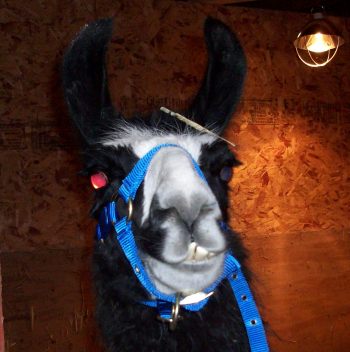
I’ve been keeping my eyes peeled for a llama to use as a livestock guardian for the sheep. I found this one nearby, from a man who had her to keep his horse company, but his horse had passed away.

Her name is “Maggie” but since we already have a dog named Maggie, we think we’ll call her the Dolly Llama. The name isn’t so important, since I don’t expect we’ll interact with her enough that she’ll learn it. But I guess it’s convention to name the permanent residents of the farm, anyway.

She is around 13 years old. I was able to speak with her breeder, who offered to breed her in the future for me, so I can have a replacement for her (since she’s “getting up there” in age).

I think she’s a reasonable quality llama, she’s a little cow-hocked in the rear, and her teeth are a little crooked. But her fiber looks really nice. She is pretty well behaved, we were able to catch and lead her without much difficulty. I transported her in my cargo van, and she rode calmly.

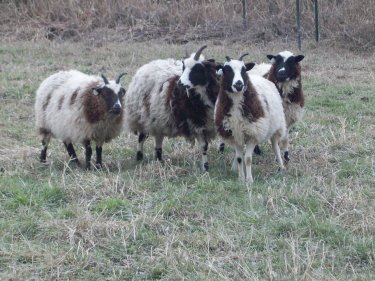
Here is a photo of her meeting the sheep. They pondered each other from a distance for an hour or two. But she seemed anxious to be close to a herd, and kept tailing the sheep. By the end of the day, it looked like they had mostly joined up. Hopefully she’ll be well-bonded to them by spring, such that she is motivated to defend the lambs.

Another llama seller I corresponded with on craigslist told me an interesting tale- she had a llama injure some of her lambs. She learned, in retrospect, that it’s not good to introduce a few sheep to multiple llamas in the llamas’ pasture, as they may perceive the sheep as intruders and drive them out. Instead, it works better to leverage a single llama’s lonliness in a pasture that’s new to them– they’ll be more likely to behave in a solicitous manner to the sheep herd in hopes of joining up.

Farmer Tax Breaks

This next tax return I’ll need to start writing off farm expenses. I have a lot to learn and read up on in this regard. I know there are many tax advantages to being a farmer (which still hardly offset all of the financial disadvantages… but hey, you take what you can get!).

Ā 

We are already enjoying one advantage, and that is the ā€œopen space agricultureā€ tax break that is available in our state and county. The rule here is, if you show an agricultural gross income of $200/acre/year every three out of five years, the county will calculate your property’s taxable value based on its ā€œcurrent useā€ and not its ā€œbest use.ā€

Ā 

This is intended to help offset the fact that (at least until now) property values were skyrocketing, such that farmers could not justify keeping the land in agricultural use and paying high property taxes when the land was worth so much for residential development purposes. Add to that the falling profitability of traditional family farms and farmers’ kids not wanting to carry on their family’s legacy, farmers were selling land like crazy to developers in the last two decades.

Ā 

The state and county realized they had to stop this trend, or there would be no farmland left! So, this tax break was invented-no matter how much your land would appraise for as commercial or residential real estate, it is taxed as if it’s only value is as cropland or graze.

Ā 

Now that the farm is up and running, I think we’ll be able to meet the $200/acre/year rule with little difficulty. We have 12 acres in open space, so we have to bring in $2400 a year—if we have a good lamb crop, that will do it right there. Note that this is gross profit, not net, so you don’t even have to show that you are making money on your farm. But I had been starting to feel some pressure, as it has taken two years just to get the place back into farming condition, so technically we must show this profit in the next three years. But I also don’t think anyone checks real often, as I’ve seen many farms in open space status where clearly no farming has been done recently. It’s probably one of those laws where unless someone turns you in, like a nasty neighbor, it does not get noticed….

Ā 

So, anyway, back to income taxes. I believe that I can start writing off the tractor, tractor fuel, fencing expenses, feed for the ducks and sheep, and many other expenses. I’m also wondering whether I can write off the dog and cat food, since the dogs work on the farm, and the cat is a mouser. I’ve started keeping better categories in my Quicken records to break down all the various farm expenses, to make for easier reporting in the long run. But I feel as though I probably have a lot of reading to do, to master the subject of tax write-offs available to farmers. Ā 

Farm Early

Today, I got up early so I could feed animals before work. I think I’m going to have to shift to these “farm hours” for the winter. This will enable me to make sure the animals have thawed water in the morning, and that the sheep have all day to eat their grain. I’ve been getting by with feeding them after work, but now it’s getting dark, and the sheep won’t eat then.

It felt good to be up and about; knock on wood, hopefully I’ll keep thinking that. Normally I’m not a morning person, and get up at the last possible moment. This is turning over a new leaf for me.

On the subject of grain; I’ve sure been pondering how I want to feed the sheep. It’s working out well feeding them grain now, they are acclimating to my presence, and I can take a look at them up close while they’re eating. They are about at the end of their flushing phase, and the bag of grain is running out. So, I may let them go without for a little while. It seems the cost of grain can quickly add up to the cost of a lamb or two, so I feel that I want to be conservative on how much I utilize.

Some sources say to start adding grain in the last two months of pregnancy. That would be in the November time frame for the ewes that came already bred. Yet, the ones that were bred this month shouldn’t be allowed to get too fat during the early stages of their pregnancy. So, I don’t know what I’ll do.

I’d so far been feeding a bagged sheep ration, but I don’t like the idea of all those processed grains. I think I’ll switch to dry COB (corn, oats, barley) when I buy the next bag.

House Sale Prep Weekend

Phew, we got a lot of work done this weekend! We spent the whole weekend working on Kirk’s house, getting it ready for sale. We are really hoping to have it on the market by the end of the month. This weekend, I painted the entry, stair, and upstairs hallway; those areas had really dirty yellow paint that HAD to be fixed. Kirk refinished the bathtub in the upstairs bathroom. Now we are both tired!

I did manage to squeeze in some baking tonight-snicker doodles! But, most of my other weekend chores were left undone-vacuuming, cleaning the dog’s fenced area, and the like. It’s just hard to fit everything in sometimes.

Quick Shelter Using Wedge-Loc & T-Post Construction

Goal: a quick-to-construct, non-permanent rain shelter for the sheep.

Rationale: I’m not sure yet if I want permanent structures down in the fields, and where I’d want them.

Concerns: shelters are, by nature, hangouts. The soil around them gets muddy. Mud is bad for livestock feet, besides being unpleasant for everyone to walk in, and unsightly. Adding bedding to shelter areas to dry them out is costly and a lot of work.

Potential Solution I’m trying: creating temporary structures from T-posts, which I can hopefully move without too much effort. The Wedge-Loc hardware caught my attention, as it promises easily built structures. Unfortunately, their marketing materials are poor– just a pamphlet with hand-drawn sketches. They leave a lot to your imagination (and maybe on purpose?). But, lacking other ideas, I decided to give them a chance. The first picture you see is the finished product, a very simple shed roof, 4’x8′.

The first Wedge-Loc widget I bought was the all-purpose angle bracket. The pamphlet suggests you can use this for a roof. But, I found that these are very flexible, intended to be bent to the desired angle just with your hand. So, not strong enough to hold up a shed roof. I think wind forces would bend and mangle them. So I set those aside for some other project.

The next bracket I tried and stuck with was the 2×4 holder. IĀ just ran two 10′ treated 2x4s across four T-posts set to accommodate a 4×8′ sheet of plywood. I found the 2×4 brackets were also very flexible, so I had to put screws and washers through them on both sides to make sure they’d stay formed around the board.

So, here is how the Wedge-Loc brackets work. There is a main piece that slides over the top of the T-post like thus:

Ā 

Then, a “wedge” slides in on the back part of the T-post, holding the bracket in place. It sort of wedges around one of the nodules on the post, so that it cannot slide down or up.

Ā 

Once this is in place, you can attach a variety of other brackets to this to hold things. Here is a U-shaped bracket inserted, that holds a 2×4:

Ā 

Here is the trouble with these, they bend:

But, with some extra screws, it seems to hold well, like this:

Here is a side view of the finished roof. I put corrugated roofing on top of the plywood, which now leads me to realize I can probably skip they plywood and just screw roofing into the 2×4 cross-pieces.

It seems to have worked; though it appears it may wiggle in the wind, I think it’s strong enough to stay put. And, it should be easy to un-wedge the brackets, lift off the roof, and move the shelter with minimal effort. The one thing is cost- the brackets are fairly expensive. So I don’t think this is any cheaper than builing a “real” shed from wood; the only advantage is the quick assembly and portability. Not to mention, it’s not terribly attractive. But I think I may make a few more of these, because we are just not firm yet on where we want permament buildings.

Gate Hanging Part 2

Here are a few more pictures of my recent gate-hanging lessons. The gates I buy are labled for the gate opening size, if you plan to have the gate fit that opening exactly. But the gate framesĀ are actually about 4″ narrower; this allows room for the hinges on one side, and a little bit of clearance on the other so that the gate can swing freely in both directions. For most of my big gates, I had planned on using interior latches, which require a very specific amount of extra space allowed forĀ  them– I think between 2-2 3/4″, or something like that.

I tried very hard to place the posts exactly right to get the opening within the tolerance allowed. But, I didn’t always succeed, so I had one opening that wasĀ a little too narrow. So, the gate only swings in one direction here, and has a latch that can accommodate one-hand operation. This latch also holds the weight of the gate up, to help minimize sagging (upper left photo). And, it accepts a padlock, which I may choose to use since this borders neighboring property.

This gate opening also had the problem of too much slope under the gate. It would have been wiser to have placed this gate further down the fenceline where the ground was level. But doing gates mid-fence instead of along the corners requires H-braces on either side, so costs a lot more in extra posts and work. So, I made do with this corner gate and back-filled some soil at the low point. It can now keep in livestock, but not the dogs (or coyotes)-they scoot underneath. I may need to do some more work with it in the future.

Here is what it looks like now.

Ā The opposite problem I had was with openings that ended up a little too wide. I just filled in the extra space with treated 2×6″ boards, as needed, so that there aren’t tempting openings for lambs and dogs to try to squeeze through.

Here is one opening that ended up too wide- the gate swings nicely in both directions, but there is a good 4″ of extra clearance I didn’t intend to have!

And, below, is the solution: a “sandwich” of two 2×6’s. I’ve seen people correct even bigger gaps by building a box on the side of the post, so that the full width of a 2×6 can extent out and have another 2×6 capping on top of that, to provide a spot for the latch.

This is another one-hand latch, this one lets the gate go in either direction, and also supports its weight, when closed, to ease sagging. And, this one also accepts a padlock. I’ve installed brass combination locks on the gates by the road, just to discourage any “visitors.” I’m less worried about theft than rowdy teenagers being tempted to do any 4×4’ing in the pasture, or do any “cow tipping.” But, with the combo locks, I can give the combo to anyone who needs to get in, like my friends who want to use the field to train their dogs for tracking.Ā 

Chicken in the Crockpot Today

Sometimes I learn the most valuable things on other people’s blogs. This one is so simple, and yet mildly life-altering for me-how to cook a chicken in a crockpot in the most trivial fashion imaginable. I learned this from Wardeh’s blog postĀ on crockpot chickens. It turns out, you just throw an entire chicken (or two, if they’ll fit in your crockpot), maybe go so far as to toss some salt and pepper in there, turn it on, and that’s it. Either cooking them overnight or all day renders ready-to-go chicken that can be used in anything. They create their own liquid, so there is nothing else to add.

When it’s done cooking, I take it out and let itĀ cool for a bit. Then I quickly pick all the good meat off the bones and set aside for our uses. The cruddier meat I set aside for the dogs, I’ll get 1-2 meals’ worth of meat for them from one chicken! The oily stock that comes off the chicken I might save for soup base, or give it to the dogs. The bones get thrown away (cooked bones no good for dogs, they splinter and can puncture their intestines…). I would say there is, maybe, a 15-20 minute time investment in the whole thing.

This is so cool, before I read this, I had no idea it was so easy. I had visions of roasting the chicken in the oven, basting it, tending to it, keeping an eye on its temperature– a lot of work and being in the house all day just to get some chicken ready for a recipe. So, I’d steered clear of things that call for roasted, chopped chicken.

But, now, with this, I find there are lots of things I can do with the chicken, I can get several meals out of it. Like, chicken soup, chicken casserole, chicken salad, chicken sandwiches, chicken quesadillas, chicken chili, and chicken enchiladas. So, that’s what’s on the menu for today, and possibly tomorrow: something with chicken in it, as I have one in a crockpot this morning.

Good Cookin’

One thing that Kirk and I have learned to enjoy together is cooking good food. This is of great help to me, because though I enjoy cooking, I never really liked doing it when I lived by myself. I had trouble knowing how to cook meat, and I’d get sick of all the leftovers. So, when I was single, I tended to live off of frozen dinners, cheese and crackers, other highly processed food, and also eating out way too much. I was impatient about sitting down to eat, and would tend to do it while working on the computer, thus compounding my bad health habits by not paying attention to how much I ate!

Now, we are getting into a pretty good groove of shopping ahead, and planning diverse, reasonably healthy meals. I say reasonably, because we probably need to make a few tweaks-less meat, more whole grain, increased fruits & veggies. But, we do pretty well, and definitely a lot better than I ever did living alone! And, we can enjoy some fine foods that would otherwise cost a fortune at a restaurant, and save money overall by eating leftovers for lunch the next day. We often end up with too many leftovers in general, but then those go into the dog food. So nothing is wasted.

Here is a favorite of ours, Salmon Moqueca, that we made last weekend. It is apparently derived from Brazilian food flair, though sometimes I take it more in a Thai direction, depending on what spices I happen to grab. I have made this enough now that I don’t often look at the recipe when choosing the spices.

Salmon Moqueca

-Make aĀ batch of brown rice in a rice cooker. Brown rice goes with this recipe much better than white rice, IMO.

Marinate 1 pound salmon fillet, with skin, in:
1/2 tsp ground fenugreek seeds [I don’t have fenugreek, but make do without it…]
2 tbsp red or white wine vinegar
1 tsp ground coriander seeds
1 tsp ground cumin
12/ tsp cayenne
1/4 tsp turmeric
You’re supposed to try to marinate for at least a half hour, sometimes I pull this off, sometimes not. I also don’t measure the spices, I just toss in whatever strikes my fancy, and often prefer to use a lot more vinegar to get a nice deep soak for the salmon. After marinating, pan-fry the salmon in olive oil or butter, peel of the skin, set aside.

Saute together:
1 clove garlic, chopped
1/4 c chopped green onions
1/4 c chopped tomato
1/4 c chopped bell peppers
1 small onion, chopped
1 tsp paprika

Mix in & simmer:
1/2 c. canned coconut milk
1/2 c. sour cream
[I often use more, I mix them together, and add salt, rice wine vinegar to taste; to get the right balance of sweet, tangy and salty.]

Serve salmon on top of rice, topped with vegetable stew sauce and a garnish of chopped cilantro.

A Little Baking

I have been a baking fan on and off in my life since I was a grade schooler. But lately it had fallen by the wayside, I just wasn’t making time for it, and wasn’t keeping the right stock of ingredients around to make things. It’s been on my mind, with the prices of sweet treats in the store and that there aren’t many choices there for cookies etc. made from reasonably healthy ingredients. Then, recently, Stonehead’s blog post on “Squeezing inĀ more baking”gave me the nudge I needed to reflect that making cookies and quick breads really doesn’t take much time at all-maybe twenty minutes.

So, last week I made chocolate chip cookies, and last night, Pumpkin Cream Cheese Bread. The latter is pretty scrumptious. I had snipped this recipe from a newspaper, but the proportions weren’t right. I think the author mistakenly halved the bread quantities but left the cream filling double. So the first time I tried it, I had low-profile loaves with an out-of-control amount of filling. This time, I was able to fix the numbers, and it came out more like I was anticipating. And, I like recipes like this, with very simple measurements and instructions. A perfect comfort food for these crisp fall days!

Ā 

Pumpkin Cream Cheese Quick Bread
Cream cheese filling: beat together:
8 oz pkg cream cheese
1/2 c sugar
1 tbsp flour
1 egg
1 tsp orange zest

“Dry” ingredients: sift together in a bowl:
3 1/3 c flour
2 tsp baking soda
1 tsp salt
1 tsp cinnamon
1 tsp cloves
1 tsp pumpkin pie spice

“Wet” ingredients: beat together in a separate bowl:
2 c pumpkin puree
1 c veg oil
4 eggs
3 c sugar

Beat together wet & dry ingredients til just combined. Cover bottoms of both baking pans with enough batter to make about 1/3 of the total volume of each loaf.Ā  Spread cream cheese filling in”channels” down the middle of each loaf. Top with remaining batter, spread to cover cream cheese.

Bake @ 350 for 70+ minutes, until tops spring back when touched & they pass the toothpick test. Cool 10 min in pans, then cool more on wire racks.

Sheep Flock Management Software

I am seriously considering purchasing some software to manage my sheep flock’s breeding program. Though I only have six ewes, I’m thinking of buying more, and possibly unregistered ones that I would use in a grade-up program with the purebred ram.

And, I’ve realized that these Katahdin pedigrees are very hard to read– all numbers. They charge $100 extra if you want to assign a name to a “special” animal; which obviously discourages naming.

I have a pet peeve with any animal registry that doesn’t encourage easy-to-read, unique naming conventions. Though AKC dogs, race horses and the likeĀ can often have silly, superfluous names, it does allow for easy pedigree reading. You can always remember something like “that animal is out of Howdy Rowdy and Mrs. Slick.” MUCH easier to read and recall than “by 15064Ā out ofĀ 33870.” I can’t stand the Border Collie world’s convention of single-syllable dog names either, my head swims with trying to differentiate Jane Doe’s “Moss” from Billy Jones’ “Moss”. ThereĀ can be a dozen different dogs all named Moss in the same pedigree! šŸ™

So, back to my software choices, I’ve been searching the web for what options are out there. I respect software developers who know how to do Search Engine Optimization (SEO) to market their product, and am highly suspicious of software developed by anybody who cannot get their product on the first page of a google search. I’ve decided, too, that I don’t want to spend more than about $100 for the software, and preferably a lot less. I do like the idea of Palm Pilot extensions, because I’m already taking notes on my Palm phone when out in the field. So, here is what I found that is under consideration.

High relevancy in google searches:

FlockFilerĀ is $50. I find their website to be a little cluttered and weird. I did read some good reviews on itĀ on a discussion list. Free demo. The beta test “pro” version has some promising features for interesting genetic relations analysis; but it costs $296. More than I want to spend.

Sheep Breeders Notebook has two editions, “basic” forĀ $39, “business edition” forĀ $97. No support for Windows Vista, though that’s ok with me for now, I’m still running XP. Free demo. Nice website.Ā I think I’m going to need the business edition, however, for full pedigree support.

ZooEasy is $79; they have a very professional-looking website. Free demo too.

Breeder’s Assistant: website made me lose interest before even finding the price. Looks like combined cattle/sheep/goat software-I’m not sure I like that. Maybe I’ll give them a second look.

Low relevancy (page 2 or me finding them through someone else mentioning them):

Lion Edge Technologies offers a Palm Pilot extension. It promises good pedigree analysis; as I know I’m going to be challenged to prevent inbreeding over time. $200 for the package.

TGM Software Solutions “Select Sheepware” also offers a Palm companion. Their prices are based on number of ewes, with <100 ewes being $100. No price listed for sheep PDA software.

Ewebite seems way too costly ($400) and their website seems Canada-centric. I’d go crazy if the units were all in the metric system!

Sheep Master Gold has a not-very-good website, and they keep highlighting the word milk, which leads me to believe they are a dairy sheep-centric business. $95. MDI Sheep Management Software is $239, too much.

Ewefarm has an attractive website, but I could not find pricing info on there and their product page just says “coming soon.”Ā Elsewhere, it mentions that they only have a Canadian version right now.

Ovitec has a really cool website, and their marketers did a great job on their logos and product naming conventions (just not on their SEO). Additionally, they have a Freeware version of it that you can start with and use indefinitely, though it looks severely de-featured. But the cheapest upgraded version is $479, good for 1,000 ewes–probably too sophisticated for me! It sounds like this product was developed with Spanish as the primary language and later translated into English; one review I read said that they’ve missed quite a few translations here and there.

My next step is checking out the free demos: I have the top three downloaded, and have tinkered with two so far. I’ll report back soon.